
In recent years, youtube shorts monetization has transformed how creators earn money from short-form content. Many people upload Shorts daily, but very few fully understand how youtube shorts monetization actually works. If you are serious about earning through Shorts, you must clearly understand the eligibility requirements, revenue sharing model, and payment structure behind youtube shorts monetization. This complete guide explains everything about youtube shorts monetization, including how revenue is calculated, how to qualify, and how to maximize earnings sustainably.
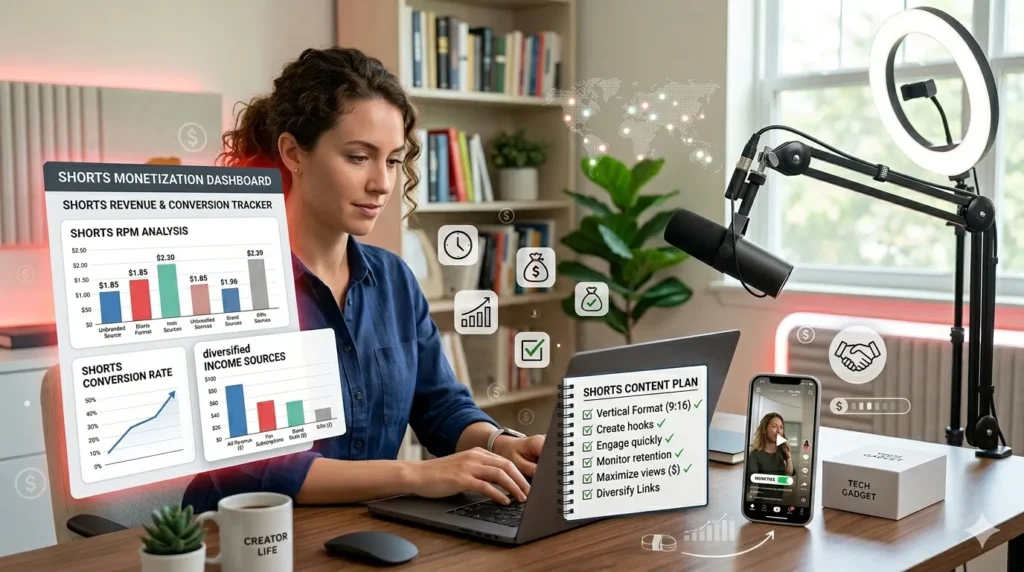
What Is YouTube Shorts Monetization?
At its core, youtube shorts monetization refers to earning revenue from short vertical videos (under 60 seconds) uploaded to YouTube.
Unlike long-form videos, youtube shorts monetization works through a revenue-sharing model based on ad revenue pooling. Instead of ads running directly on each individual Short in the same way as long-form content, YouTube combines ad revenue from Shorts and distributes it among eligible creators.
Understanding this structure is essential to mastering youtube shorts monetization.
YouTube Shorts Monetization Eligibility Requirements
To qualify for youtube shorts monetization, creators must join the YouTube Partner Program (YPP).
As of 2026, requirements include:
1,000 subscribers
AND either:
10 million valid public Shorts views in the last 90 days
OR
4,000 valid public watch hours (for long-form eligibility path)
These criteria are the foundation of youtube shorts monetization.
Additionally, creators must:
Follow YouTube monetization policies
Avoid reused content
Enable two-step verification
Link an AdSense account
Without meeting these standards, youtube shorts monetization will not be activated.
How YouTube Shorts Monetization Revenue Is Calculated
The way youtube shorts monetization calculates revenue is different from traditional YouTube ads.
Here’s how it works:
- Ads appear between Shorts in the Shorts feed.
- All ad revenue from Shorts is pooled together monthly.
- A portion is allocated to cover music licensing.
- The remaining revenue is distributed among eligible creators based on views.
- Creators receive 45% of their allocated revenue share.
This revenue-sharing system is the core mechanism behind youtube shorts monetization.
RPM and Earnings in YouTube Shorts Monetization
RPM (Revenue Per Mille) in youtube shorts monetization is typically lower than long-form YouTube videos.
Estimated RPM range:
$0.02 to $0.10 per 1,000 views (varies by location and niche)
While this may seem low, viral potential makes youtube shorts monetization scalable.
For example:
1 million views × $0.05 RPM = $50
10 million views × $0.05 RPM = $500
These numbers show how youtube shorts monetization rewards high volume.
Factors That Affect YouTube Shorts Monetization Earnings
Several factors influence youtube shorts monetization income:
Audience location (USA viewers generate higher RPM)
Niche category
Engagement rate
Watch retention
Content originality
Understanding these factors helps optimize your strategy for youtube shorts monetization.
Differences Between Long-Form and YouTube Shorts Monetization
It is important to compare traditional monetization with youtube shorts monetization.
Long-form videos:
Higher RPM
Direct ad placement
Mid-roll ads
YouTube Shorts monetization:
Revenue pooling system
Lower RPM
High viral potential
Each method has advantages, but youtube shorts monetization favors creators who can generate massive views quickly.
Strategies to Maximize YouTube Shorts Monetization
If you want to grow income through youtube shorts monetization, follow these strategies:
Post consistently (daily or 3–5 times weekly)
Hook viewers in the first 2 seconds
Keep content under 45 seconds for retention
Focus on trending topics
Use engaging captions
Retention is critical for successful youtube shorts monetization.
Content Ideas for YouTube Shorts Monetization
Popular niches for youtube shorts monetization include:
Motivational clips
Educational tips
Tech facts
Finance tips
Fitness advice
Quick tutorials
Choosing a profitable niche increases success in youtube shorts monetization.
YouTube Shorts Monetization and Copyright Rules
One major issue in youtube shorts monetization is reused content.
YouTube does not allow:
Compilation videos without transformation
Reuploaded TikTok videos with watermark
Movie clips without commentary
Violating policies can disable youtube shorts monetization permanently.
Payment Process for YouTube Shorts Monetization
Understanding payment timing is important for creators in youtube shorts monetization.
Revenue accumulates monthly.
Final earnings are calculated after month-end.
Payments are issued via AdSense once $100 threshold is reached.
This structured payment system defines how youtube shorts monetization pays creators.
Is YouTube Shorts Monetization Worth It?
Many creators ask whether youtube shorts monetization is worth pursuing.
Pros:
Fast audience growth
Low barrier to entry
Viral potential
Cross-promotion for long-form videos
Cons:
Lower RPM
High competition
When combined with long-form content, youtube shorts monetization becomes highly effective.
Advanced Strategy: Combining Shorts and Long-Form
Smart creators use youtube shorts monetization to:
Drive traffic to long-form videos
Increase subscriber growth
Boost overall channel authority
This hybrid strategy strengthens total earnings beyond just youtube shorts monetization alone.
How does YouTube Shorts monetization work?
YouTube shorts monetization works through pooled ad revenue shared among eligible creators based on views.
How many views are needed for YouTube Shorts monetization?
You need 10 million valid Shorts views in 90 days to qualify under youtube shorts monetization rules.
Does YouTube Shorts monetization pay per view?
No, youtube shorts monetization pays based on revenue pooling and view share, not direct per-view ad placement.
Is YouTube Shorts monetization profitable?
YouTube shorts monetization can be profitable with high-volume views and USA audience.
Can reused content qualify for YouTube Shorts monetization?
No. Reused content violates policies and disqualifies youtube shorts monetization eligibility.
Final Thoughts
YouTube shorts monetization is a powerful opportunity for creators willing to produce consistent, high-retention short-form content. While RPM is lower than long-form videos, the viral potential of Shorts makes youtube shorts monetization scalable. Success requires originality, consistency, and compliance with monetization policies. When combined with long-form content and other revenue streams, youtube shorts monetization can become a strong component of your overall YouTube income strategy.